The best therapist headshots look like the person a client will actually meet: natural light, eye-level camera, a relaxed expression with a soft smile, plain or muted clothing, and a calm setting such as your therapy room or somewhere green. A professional session in the UK typically costs a few hundred pounds, but a well-lit phone photo is far better than no photo at all.
Why do therapist headshots matter so much?
Choosing a therapist is a relational decision. Clients scrolling a directory or your About page are asking a quiet question: could I sit in a room with this person? Your photo is the first answer. In our experience, profiles and websites with a clear, warm, recent headshot get noticeably more enquiries than those with a logo, a stock image or a holiday crop.
It's also about honesty. Clients should recognise you when they arrive or log on. A photo from ten years ago, or one heavily retouched, creates a small jolt at the start of a relationship that's meant to be built on trust.
What makes a therapist headshot feel safe and approachable?
- —Eye level — the camera at or just below your eye line. Shooting from below can feel imposing; from far above can feel diminishing.
- —Eyes to camera — direct but soft eye contact helps people feel you're present with them.
- —A natural expression — a gentle, closed-mouth or relaxed smile usually works better for therapy than a big beaming grin or a serious stare.
- —Open body language — shoulders relaxed, slightly angled; avoid tightly crossed arms.
- —Soft, natural light — window light or open shade. Harsh flash and deep shadows feel clinical.
- —A calm, uncluttered background — muted colours that sit well with your brand palette.
- —Looking like yourself — glasses on if you wear them in sessions, your usual hair, minimal retouching.
The best therapist headshot isn't the most flattering one. It's the one where a nervous client thinks, 'I could talk to her.'
Adam Watters, Founder, Psyche Creative
What should a therapist wear for headshots?
Wear what you'd wear to see clients on a good day, nudged slightly smarter. You're aiming for professional and approachable, not corporate.
- —Solid, muted colours — navy, forest green, rust, soft grey, oatmeal, or colours from your brand palette.
- —Avoid busy patterns, small checks and fine stripes, which can shimmer on camera.
- —Avoid very bright white and pure black near the face; they're harder to expose well.
- —Layers help — a knit over a shirt, or a soft blazer, adds depth and gives you two looks in one session.
- —Choose necklines and sleeves you're comfortable in for an hour of moving around.
- —Keep jewellery simple so it doesn't pull focus.
- —Bring two or three outfits so you have options for your website, LinkedIn and directory profiles.
- —Make sure everything is ironed — creases show more in photos than in person.
Where should you take therapist headshots?
| Location | Feels | Watch out for |
|---|---|---|
| Your therapy room | Authentic — clients see where they'll sit | Clutter, personal items, anything identifying clients; tidy and simplify first |
| Near a large window indoors | Soft, warm, natural | Mixed lighting from ceiling bulbs; turn them off |
| A garden or green space | Calm, grounded, open | Harsh midday sun; aim for open shade or an overcast day |
| A local landmark or street | Rooted in place, good for local practices | Busy backgrounds and passers-by |
| Plain studio backdrop | Clean and consistent | Can feel corporate; choose a warm tone rather than stark white or grey |
| A café or library corner | Relaxed, everyday | Permission to shoot and background noise of other people |
Most of our clients get the best results from a mix: a few close headshots in clean light for profiles, plus wider 'in the room' images for the website.
Wider images of your room and surroundings matter too — we cover how to choose and shoot them separately. Read: therapist website images →
What poses work best for therapist photos?
- —The classic head-and-shoulders: body angled about 30–45 degrees, face turned to camera, chin slightly forward.
- —Seated in your therapy chair, leaning very slightly in, hands resting loosely — the 'session' shot.
- —Seated with a notebook or mug — gives your hands something natural to do.
- —Standing by a window, looking out, then turning back to camera — good for a relaxed candid.
- —Walking slowly towards the camera outdoors, for a natural, unposed feel.
- —A wider landscape-format shot with space to one side, which works as a website hero image with text over it.
- —A laughing or mid-conversation candid — ask the photographer to chat while shooting.
Avoid the 'pointing at a laptop' or 'arms crossed in front of a wall' poses; they read as sales rather than therapy. And don't pose with anyone presented as a client. Even with models, it can blur boundaries and some professional-body guidance discourages anything that could look like a depicted therapeutic relationship.
How much do therapist headshots cost in the UK?
Prices depend on your area and how many images you need. As a rough guide at the time of writing (October 2026):
| Option | Typical UK cost | What you get |
|---|---|---|
| DIY with a phone | Free (plus perhaps a £20–£40 tripod and remote) | Unlimited attempts, variable results |
| A friend with a good camera | Free or a favour | Better lens, still no direction |
| Mini headshot session | Around £100–£250 | Short session, a handful of edited images, often one location |
| Personal branding shoot | Around £300–£800+ | Several outfits and locations, 20+ edited images for website and social |
| Shared or group practice shoot | Varies; often lower per person | Consistent look across all clinicians |
Before you book, check that the price includes editing and a licence to use the images on your website, social media, directories and print. Ask for high-resolution files and web-sized versions.
If you're also planning video — an intro for your website or a set of short reels — a recording day can produce stills as well. Our recording days start from £400 plus travel.
How do you take a good therapist headshot on your phone?
A modern phone is perfectly capable of a good headshot. The difference is almost entirely light and angle.
- —Face a large window in daylight, with the window behind the phone. Turn off ceiling lights.
- —Use the rear camera, not the selfie camera — it's higher quality.
- —Use portrait mode or the 2x or 3x lens to avoid the distortion of the wide lens at close range.
- —Put the phone on a tripod or a stack of books at eye level, about one to two metres away.
- —Use the self-timer in burst mode, or a Bluetooth remote, and take dozens of shots.
- —Leave space above your head and around your shoulders so you can crop for different platforms.
- —Shoot a few in landscape too, for your website.
- —Edit lightly: straighten, crop, small brightness and warmth adjustments. Avoid beauty filters.
Where should therapists use their headshots?
| Where | Crop | Notes |
|---|---|---|
| Website About page | Portrait or landscape, generous framing | Your most important placement; pair it with your bio |
| Website home page | Landscape with space for text | Check headline contrast over the photo |
| Counselling Directory, Psychology Today and similar | Square or near-square head and shoulders | Use the same photo across directories so you're recognisable |
| Google Business Profile | Square, plus a photo of your room | Helps local search look established |
| Square head and shoulders, at least 400 x 400 px | Consistent with your website photo | |
| Instagram and Facebook | Circular crop — keep your face central | Test at tiny sizes |
| Email signature | Small circle or square, around 80–120 px | Optional, but adds warmth |
| Leaflets and workshop materials | High-resolution, 300 dpi at print size | Ask the photographer for print-quality files |
Whatever you use, add alt text that describes the image plainly, for example 'Hannah Clarke, counsellor, smiling in her therapy room'. And refresh your photos every few years, or sooner if you change your look.
Your photo and your bio work as a pair. Here's how to write the words that go next to it. Read: how to write a therapist bio →
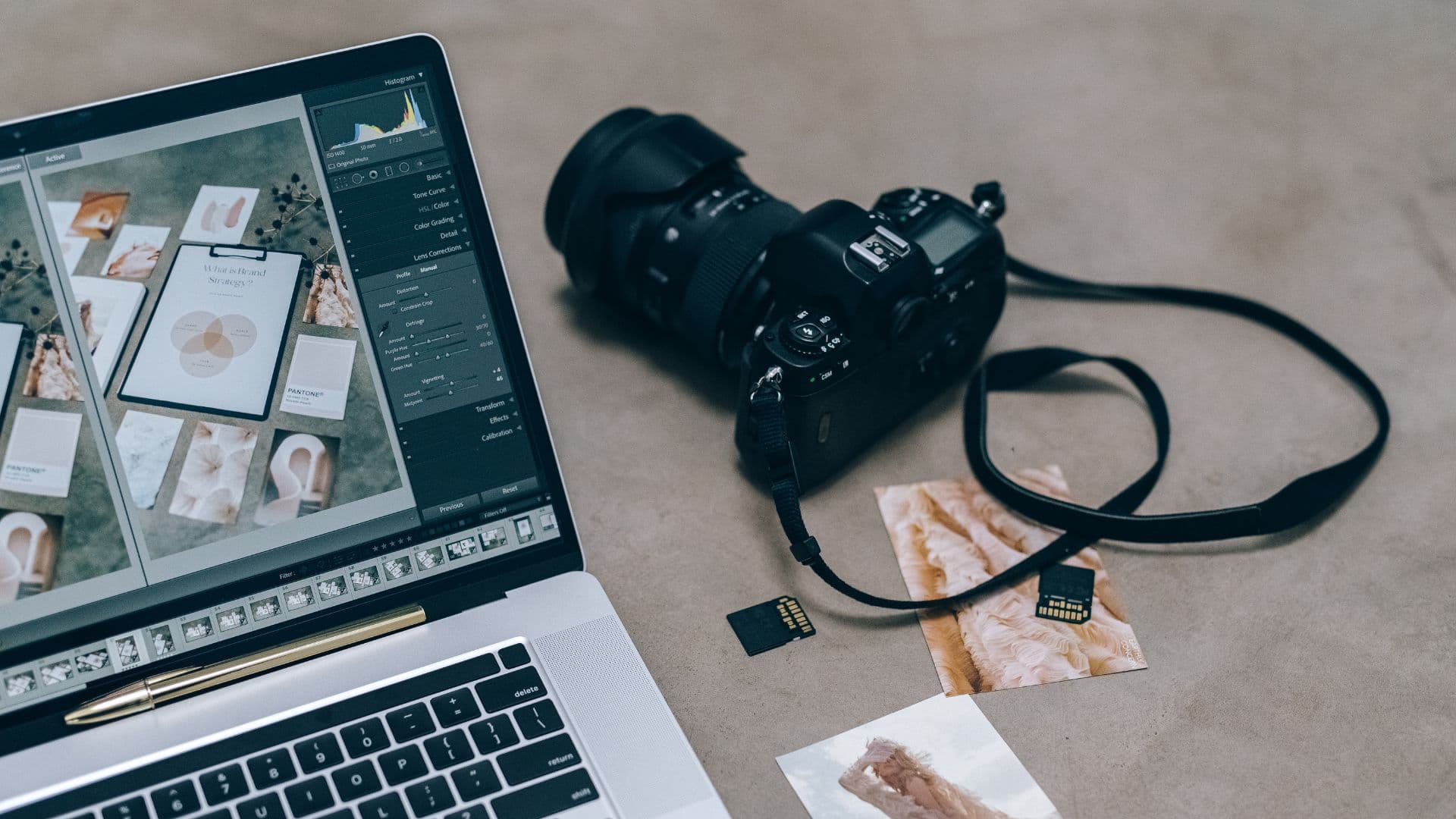
We edit, colour-grade and crop therapist photography to match your brand, and build it into websites, directory profiles and social templates. See our Graphic Design service →
Frequently asked questions
What makes a good therapist headshot?
Natural light, a camera at eye level, a relaxed expression with a soft smile, muted clothing and a calm background. Above all, it should look like the person a client will actually meet.
What should I wear for my therapist headshots?
Wear what you'd wear to see clients, slightly smarter: solid muted colours, no busy patterns, simple jewellery. Bring two or three outfits so you have options for different platforms.
How much do professional headshots cost in the UK?
At the time of writing, a short headshot session is typically around £100–£250, and a fuller personal branding shoot around £300–£800 or more, depending on location and the number of images.
Can I take my own therapist headshot on my phone?
Yes. Face a window in daylight, use the rear camera with portrait mode or the 2x lens, put the phone at eye level on a tripod and use the timer. Edit lightly and skip beauty filters.
Should I use the same headshot everywhere?
Using the same or very similar photo across your website, directories, Google Business Profile and LinkedIn helps clients recognise you and makes your practice look consistent.
Adam works with UK therapy practices, EMDR trainers and mental health organisations on websites, social media and digital campaigns. He started Psyche Creative to give clinicians a marketing partner who understands the sector — and won't compromise on professional standards to get results.